


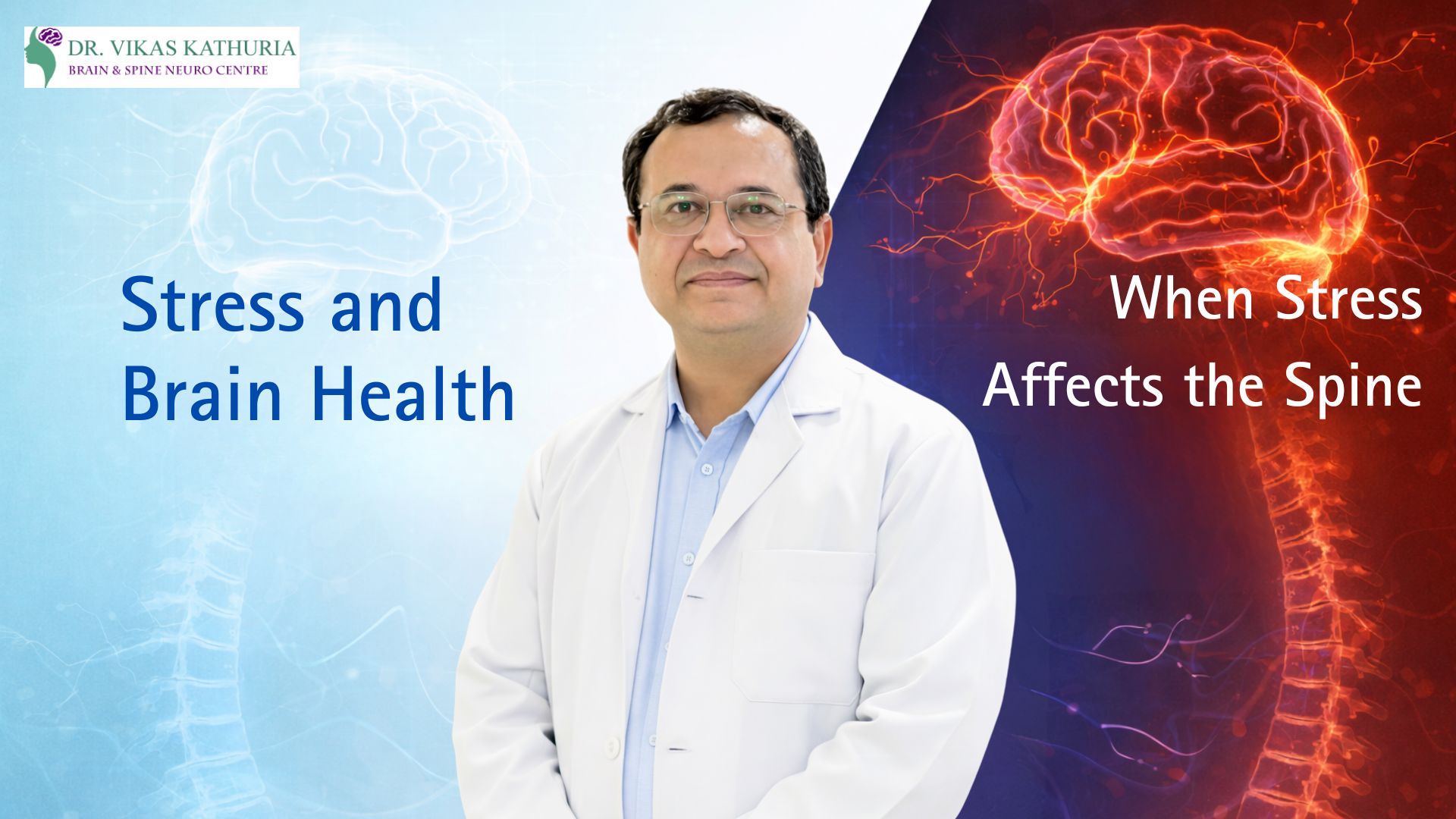
Can Stress Cause Brain or Spine Problems? A Neurosurgeon Explains
Stress is a part of daily life. Work pressure, family worries, money problems, and health concerns can all create stress. Many people feel stress in their mind, but few realize that stress can also affect the body. Patients often ask a very important question: can stress cause neurological problems?
The short answer is yes, stress can affect the brain and spine in many ways. This blog explains how stress works inside the body and how it can slowly affect brain and spine health, in very simple words.
Understanding Stress in Simple Terms
Stress is how the body reacts when it feels under pressure. When stress happens, the brain sends signals that release stress hormones. These hormones help the body handle danger for a short time.
The problem starts when stress stays for a long time. Long-term stress keeps the body in alert mode. This can affect stress and brain health and can also create problems in the spine and nerves.
How Stress Affects the Brain
The brain controls thoughts, emotions, memory, and focus. When stress stays for many days or months, the brain does not get enough rest. This can make a person feel tired, confused, or forgetful.
Many patients ask again, can stress cause neurological problems like headaches or memory trouble? Long-term stress can increase headaches, reduce concentration, and affect sleep. Over time, this puts pressure on brain function.
Stress and Brain Health Over Time
Healthy brain function needs calmness and balance. Stress disturbs this balance. High stress can change how the brain sends messages to the body.
Stress and brain health are closely connected. People under stress may feel anxiety, low mood, or slow thinking. These are not imaginary feelings. They are real responses from the brain when it feels overloaded.
Can Stress Cause Spine Problems
The spine supports the body and protects nerves. Stress can cause muscles around the neck and back to tighten. When muscles stay tight for a long time, pain starts.
This is called stress related spine pain. Many people feel neck pain, shoulder stiffness, or lower back pain during stressful periods. The spine itself may not be damaged, but stress changes how muscles and nerves behave.
Stress Related Spine Pain Explained Simply
When stress is high, people often sit badly, sleep poorly, or avoid movement. This adds more pressure on the spine.
Stress related spine pain feels real and uncomfortable. It may feel worse during stressful days and better during calm times. This shows how strongly the mind and spine are connected.
Neurological Effects of Stress on the Body
Stress does not stay only in the mind. It travels through nerves. Long-term stress can cause tingling, numbness, or burning sensations in some people.
These are called neurological effects of stress. They happen because stress changes how nerves send signals. These symptoms should always be checked by a doctor to rule out other causes.
Stress and Headaches or Dizziness
Many patients with stress complain of headaches. Stress can tighten muscles around the head and neck. This creates pressure and pain.
Dizziness and a heavy head feeling can also appear. These are common neurological effects of stress and usually improve when stress is managed properly.
Stress and Sleep Problems
Sleep is very important for brain healing. Stress makes sleep difficult. Poor sleep further affects the brain and spine.
Stress and brain health suffer when sleep is poor. The brain becomes tired, and nerves become sensitive. This can increase pain and discomfort in both the brain and spine.
Can Stress Alone Cause Serious Neurological Disease
This is a common fear. Stress by itself does not usually cause serious brain disease like tumors. But stress can worsen existing conditions and make symptoms feel stronger.
So when patients ask, can stress cause neurological problems, the answer is that stress can trigger symptoms, increase pain, and slow recovery. It should never be ignored.
When Stress Symptoms Need Medical Attention
If symptoms like weakness, vision changes, severe headaches, or balance problems appear, stress should not be blamed alone. These signs need medical evaluation.
Neurological effects of stress can look similar to other conditions. A neurosurgeon helps find the real cause and guide proper care.
How Managing Stress Helps Brain and Spine Health
Reducing stress helps the brain relax and muscles loosen. Simple habits like good sleep, gentle activity, and calm routines help a lot.
Stress and brain health improve when the mind feels safe and rested. Spine pain also reduces when muscles are relaxed.
Role of Expert Medical Guidance
Sometimes stress symptoms are confusing. Patients may feel scared about their health. Expert evaluation brings clarity.
At Dr. Vikas Kathuria’s practice, symptoms are understood carefully. Doctors check whether stress is the main cause or if something else needs attention. This ensures safety and peace of mind.
Final Thoughts for Patients
Stress is powerful, but it does not control your health completely. Understanding its effects helps you take the right steps.
If you are wondering if stress can cause neurological problems, remember that stress affects both mind and body. It can impact stress and brain health, create stress related spine pain, and cause neurological effects of stress.
With early care, proper guidance, and stress management, most people feel better. Listening to your body and seeking expert advice keeps your brain and spine healthy for the long term.