


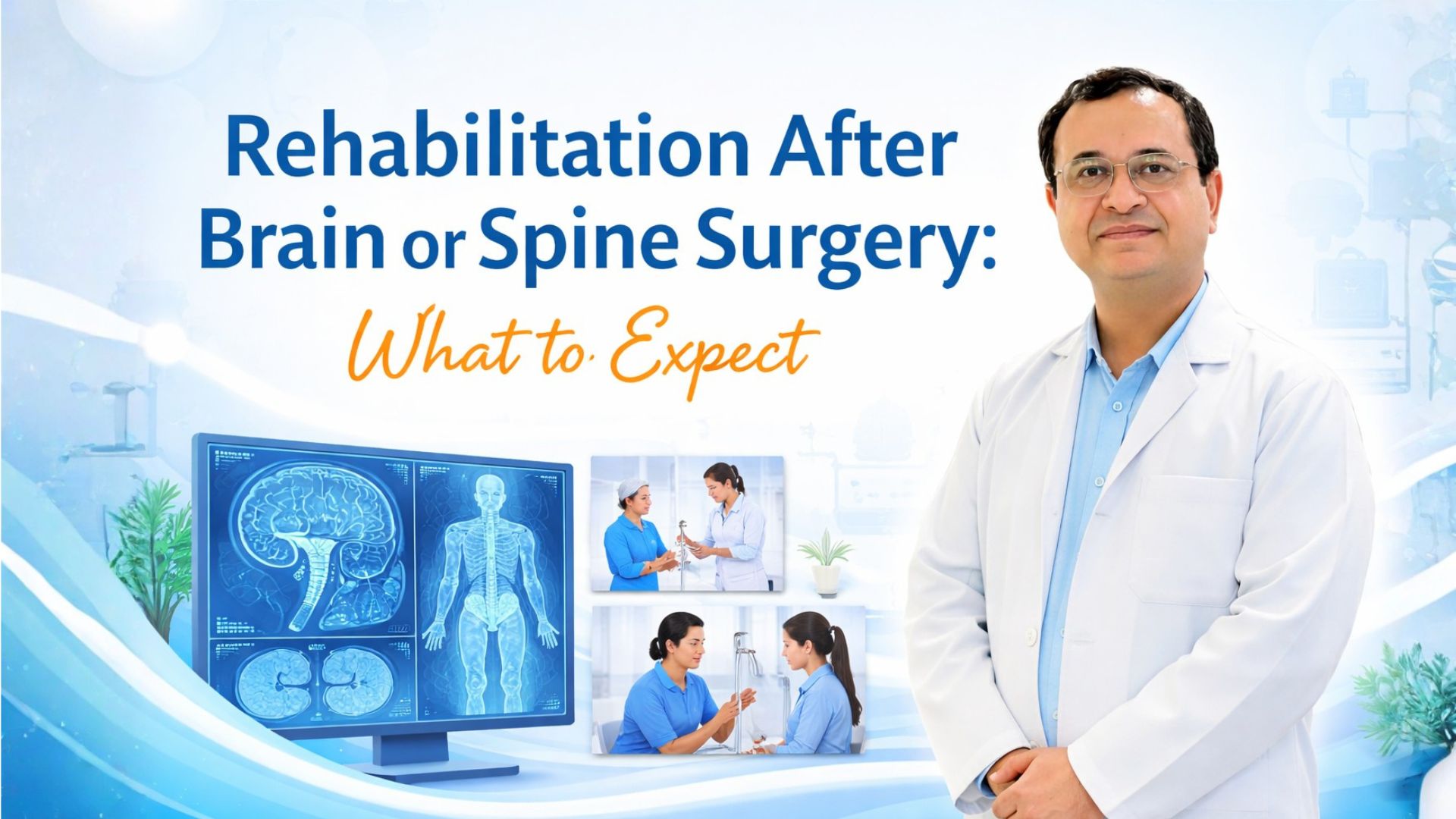
Rehabilitation After Brain or Spine Surgery: What to Expect
Surgery on the brain or spine can feel scary. Many patients think the hard part is only the operation. But healing does not stop after surgery ends. The real journey continues during recovery. This recovery time is called rehabilitation. Understanding rehabilitation after neurosurgery helps patients feel calm, hopeful, and prepared.
This guide explains what usually happens after brain or spine surgery in very simple words, so you know what to expect and how healing slowly begins.
What is the meaning of Rehabilitation after Surgery
Think of rehabilitation as a reset button. It’s the process of helping both your body and your mind heal from the stress of surgery so you can feel like yourself again. Brain and spine surgery can affect your movement, balance, speech, memory, or strength. Rehabilitation helps your body learn how to work better again.
Rehabilitation after neurosurgery is not rushed. It is gentle, planned, and done step by step. Every patient heals at a different speed, and that is completely normal.
Why Rehabilitation After Neurosurgery Is Important
After surgery, your body needs time to adjust. Muscles may feel weak. Movements may feel slow. Sometimes even simple tasks feel difficult. This does not mean surgery failed. It means your body is learning things again.
Rehabilitation helps improve strength, balance, and confidence. It also helps reduce pain and stiffness. Most importantly, it helps patients return to daily life slowly and safely.
The First Few Days After Surgery
Right after surgery, doctors and nurses observe you closely. You may feel tired, sleepy, or stiff. This is normal. Pain is managed carefully so you stay comfortable.
In these early days, rehabilitation often begins gently. Simple movements, sitting up, or small steps may be encouraged. These small actions help prevent stiffness and improve blood flow.
Physical Therapy During Recovery
Physical therapy is an important part of healing. A therapist helps you move safely and correctly. Exercises are slow and gentle at first.
Physical therapy can help in neurosurgical rehabilitation by improving walking, balance, and muscle strength. Even if movement feels hard on the first day, regular practice will give you better improvements.
Occupational Therapy and Daily Activities
Occupational therapy helps the patients do everyday tasks like eating, dressing, and writing. After brain or spine surgery, these simple actions may feel difficult to patient.
Basically, the goal of rehab is to make everyday life easier. Therapists teach you little hacks for moving safely and using specific tools so you don’t have to rely on others. It’s a huge confidence booster.
Speech and Memory Recovery
After surgery, you may feel dizzy to the point that you’re having difficulty focusing, remembering things, or even finding the right words. It’s perfectly normal to be concerned about this, but try not to stress. Most people find that it is only temporary and will eventually fade off.
Speech and cognitive therapy help the brain relearn skills. Rehabilitation after neurosurgery supports clear speech, better understanding, and improved thinking. With time and practice, many patients show steady improvement.
Emotional Healing Is Also Important
Healing is not only physical. After surgery, emotions can feel strong. Patients may feel sad, scared, or frustrated. These feelings are normal.
Rehabilitation after neurosurgery also includes emotional support. Talking to family, doctors, or counselors helps patients feel understood. A calm mind supports faster healing.
Healing at Home After Hospital Discharge
Once patients leave the hospital, recovery continues at home. Doctors give clear instructions about rest, medicines, and follow-up visits.
Rehabilitation after neurosurgery at home focuses on routine. Good sleep, healthy food, gentle activity, and patience help the body heal. Small improvements every day lead to big progress over time.
Role of Family in Rehabilitation
Family support plays a big role in recovery. Family members help patients stay positive and follow medical advice.
Rehabilitation after neurosurgery becomes easier when patients feel supported. Encouraging words and gentle help make a big difference in confidence and comfort.
How Long Does Rehabilitation Take
Every patient heals at their own pace. Some feel better in weeks, while others take months. There is no fixed timeline.
Rehabilitation after neurosurgery depends on the type of surgery, age, and overall health. Doctors guide patients through each phase and adjust care as needed.
Follow-Up Visits and Long-Term Care
Regular follow-up visits help doctors check healing progress. Adjustments in therapy or medicines may be made based on recovery.
Rehabilitation after neurosurgery is a journey, not a single step. Long-term care ensures that healing continues safely and correctly.
Staying Positive During Recovery
Recovery may feel slow at times. Progress may seem small. But every step forward matters.
Rehabilitation after neurosurgery works best when patients stay patient and hopeful. Trusting the process and following expert advice leads to better results.
Final Thoughts for Patients and Families
Brain or spine surgery is a major step, but it is only one part of healing. Recovery continues through rehabilitation, care, and support.
Understanding rehabilitation after neurosurgery helps remove fear and confusion. With expert medical guidance, proper therapy, and family support, patients can regain strength, confidence, and quality of life.
At Dr. Vikas Kathuria’s practice, recovery is guided with care, clarity, and experience. With time, patience, and the right support, healing becomes a steady and hopeful journey.