


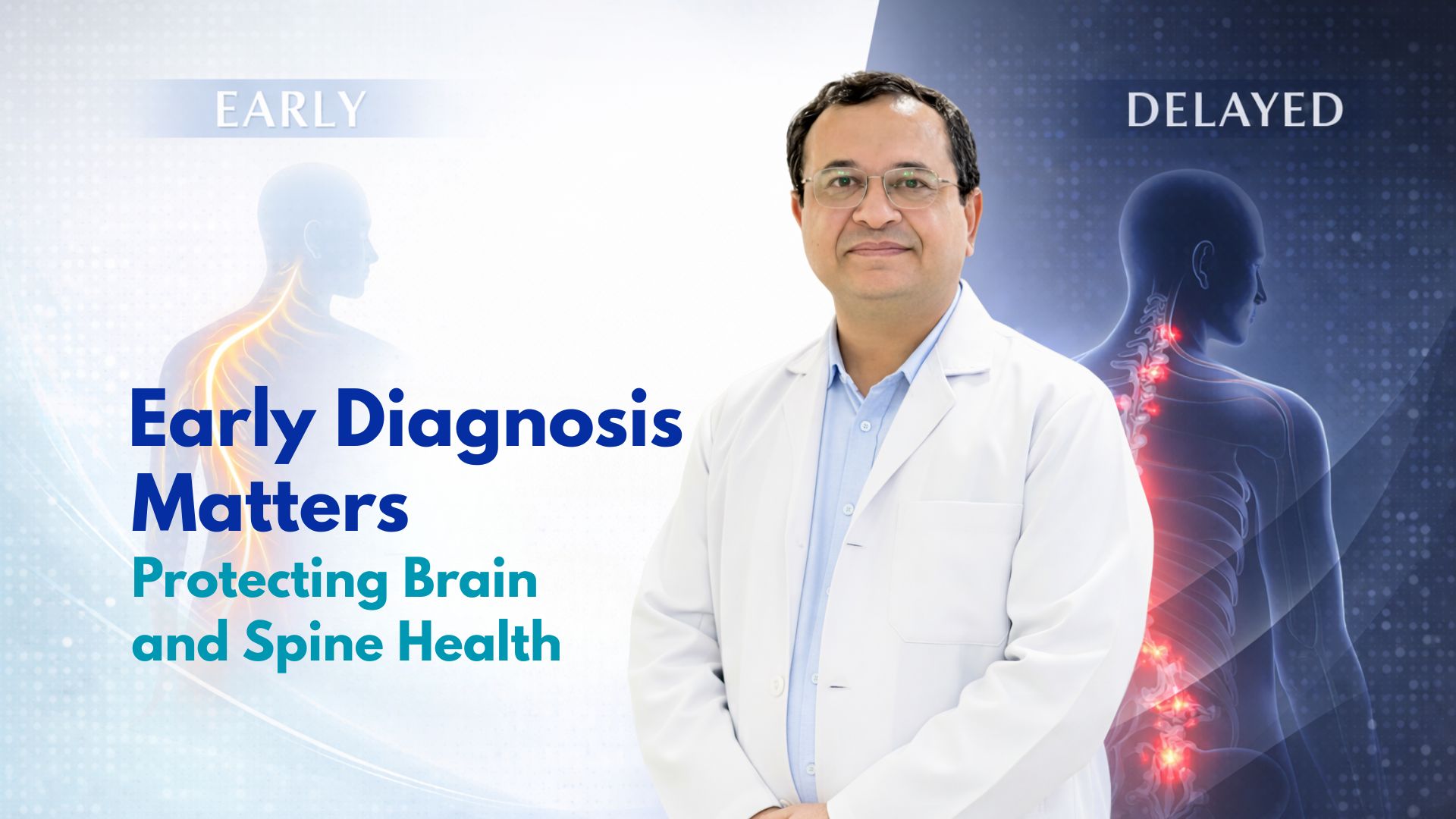
Why Early Diagnosis Matters in Brain and Spine Disorders
Our brain and spine control almost everything we do. They help us walk, talk, think, remember, and feel. When they work well, life feels normal. But when something goes wrong, the body usually gives small signals first. Many people ignore these signals because they seem minor.
Understanding the importance of early diagnosis of neurological disorders can protect health and prevent serious problems. Acting early often means simpler treatment and faster recovery.
The Brain and Spine Send Warning Messages
The body rarely becomes sick suddenly. Most brain and spine problems begin slowly. The first signs may be small headaches, mild numbness, or slight balance trouble.
These signs are the body’s way of asking for attention. Early detection of neurological problems allows clinicians to determine the reason before the illness worsen. Listening early saves time and pain later.
Why Waiting Can Make Problems Worse
Many people hope symptoms will disappear on their own. Sometimes they do, but sometimes they grow quietly.
A small nerve pressure today can become nerve damage tomorrow. A minor weakness may turn into difficulty walking later. Early diagnosis of neurological disorders prevents this slow worsening. Treating problems early is easier than treating complications later.
Common Early Symptoms People Ignore
People often ignore symptoms because they feel busy or afraid. Mild headaches, tingling fingers, back pain, or forgetfulness may look harmless.
However, repeated or uncommon symptoms require care. Early detection of neurological illnesses is dependent on recognizing patterns. When the same discomfort persists, the body is signaling for assistance.
Faster Treatment Means Better Recovery
The nervous system heals best when treated quickly. When pressure on nerves is removed early, normal function often returns.
Early diagnosis of neurological disorders allows doctors to use simple treatments. Medicines, therapy, or lifestyle changes may solve the problem without surgery. Late diagnosis may need more complex treatment.
Protecting Brain Function and Memory
The brain controls memory and thinking ability. Some conditions slowly affect concentration and learning.
If detected early, many of these problems can be managed well. Early diagnosis of neurological disorders protects daily independence and quality of life. The goal is not only survival but healthy living.
Preventing Permanent Nerve Damage
Nerves are delicate. Long pressure or injury can permanently damage them. When damage becomes permanent, recovery becomes difficult.
Early diagnosis of neurological disorders helps protect nerve signals before lasting harm occurs. Acting early keeps movement, sensation, and coordination safe.
Early Diagnosis Reduces Fear
Many patients fear visiting a specialist. They worry about serious disease. But avoiding consultation increases anxiety.
Early detection of neurological problems typically provides relief. Many of the symptoms are actually manageable diseases. Knowing the facts sooner is less stressful than fearing the worst.
Children and Adults Both Benefit
Brain and spine disorders do not only affect older people. Young adults and children may also develop neurological problems.
Early diagnosis of neurological disorders supports learning, growth, and daily activities in every age group. Early care builds confidence for patients and families.
Technology Helps Detect Problems Early
Modern imaging and medical tests help doctors see inside the brain and spine clearly. These tools detect issues even before major symptoms appear.
Early diagnosis of neurological disorders has become safer and more accurate because of these advances. Proper evaluation prevents guesswork and wrong treatment.
When Should You See a Specialist
Symptoms lasting more than a few days should not be ignored. Sudden weakness, numbness, balance trouble, severe headaches, or speech difficulty need immediate attention.
Early detection of neurological problems requires immediate consultation. Waiting until symptoms become unbearable is never a smart idea.
The Role of Regular Checkups
Health checkups are not only for heart or sugar problems. They also help detect neurological conditions early.
Early diagnosis of neurological disorders sometimes happens during routine visits. Small tests today prevent major treatment tomorrow.
Supporting Families Through Awareness
Families often notice changes before patients do. Slower walking, confusion, mood changes, or hand weakness may appear gradually.
Encouraging medical consultation helps loved ones stay healthy. Early diagnosis of neurological disorders protects independence and confidence.
Treatment Is Not Always Surgery
Many people think visiting a neurosurgeon means surgery. This is not true. Most neurological problems are treated without operation.
Early diagnosis of neurological disorders allows conservative treatment. Surgery is suggested only when truly necessary.
A Safer Future With Early Care
Good health depends on awareness and action. The earlier a condition is found, the easier it is to treat.
Early diagnosis of neurological disorders reduces complications, cost, and recovery time. It protects mobility, memory, and daily comfort.
Final Thoughts
The body speaks softly before it shouts. Small symptoms are early warnings, not inconveniences. Ignoring them delays healing.
Understanding the value of early diagnosis of neurological disorders helps patients choose safety over delay. Quick medical guidance protects the brain and spine and supports a healthier future. At Dr. Vikas Kathuria’s clinic, careful evaluation and patient education guide every step. Early attention today creates stronger health tomorrow.